


When your team is capable, but something still isn’t working
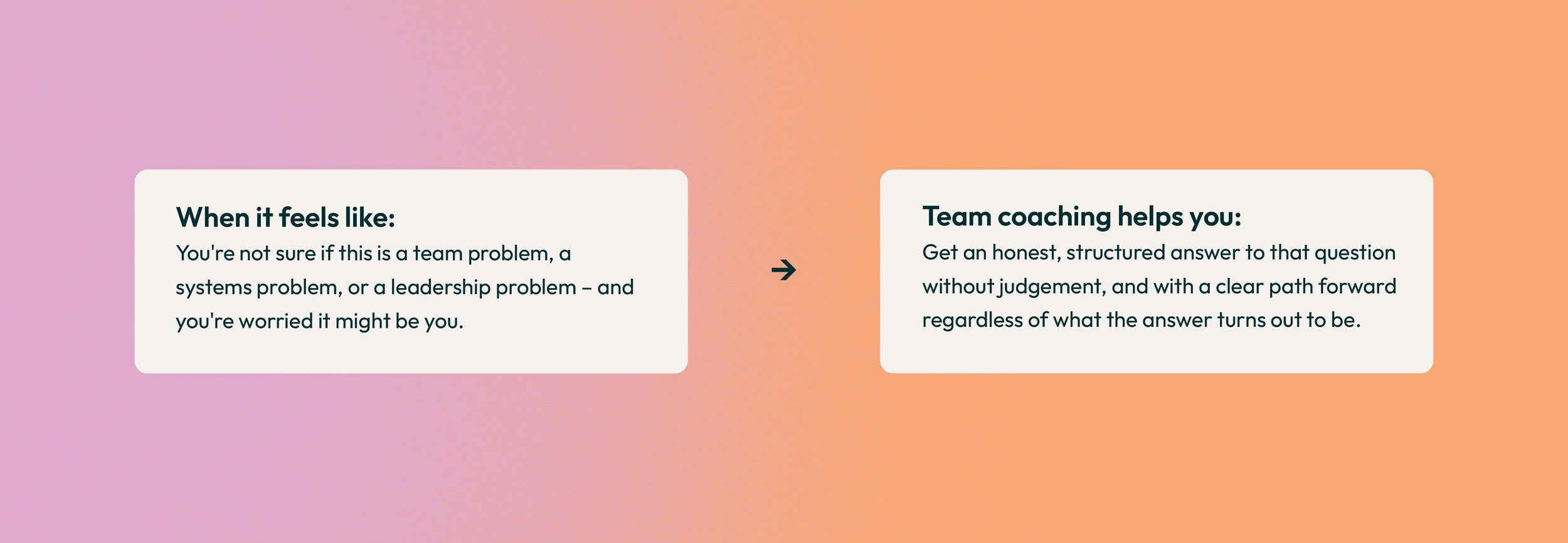
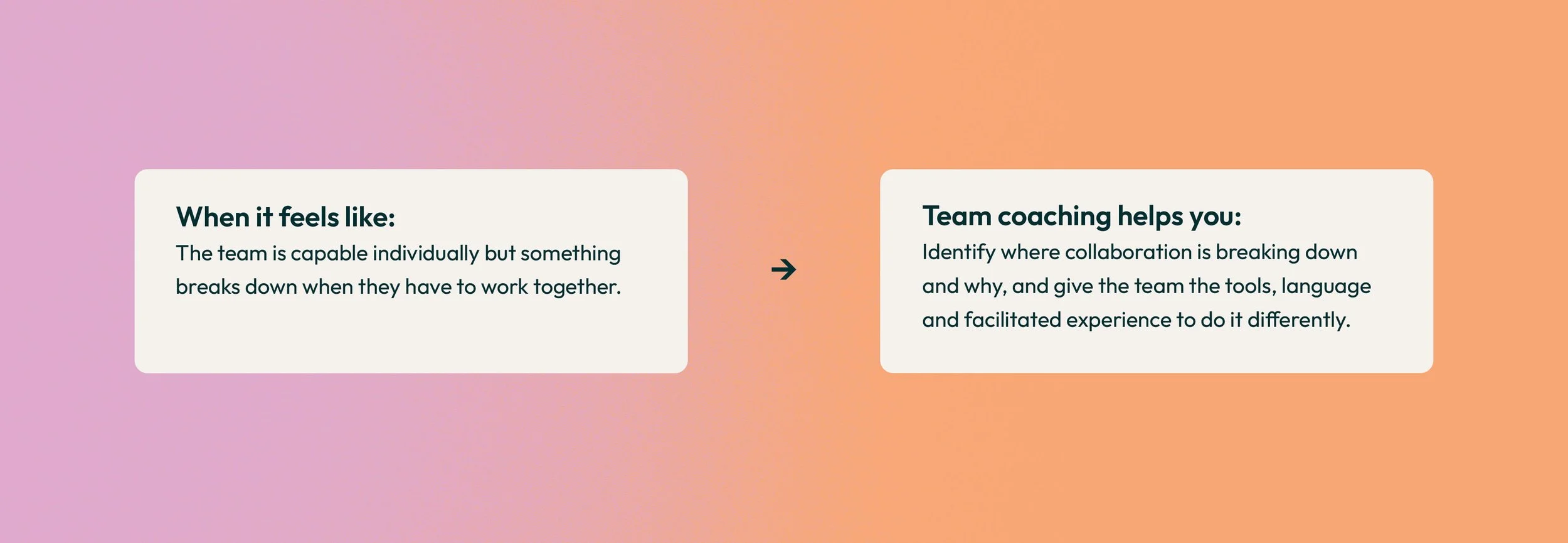
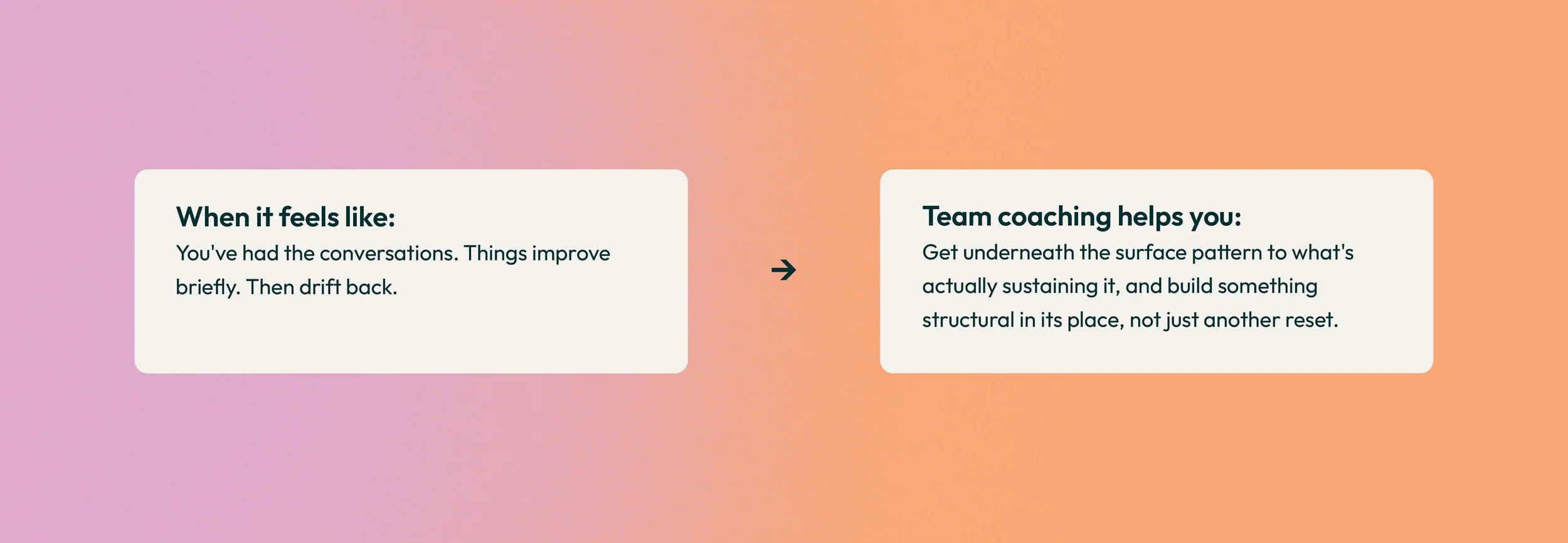
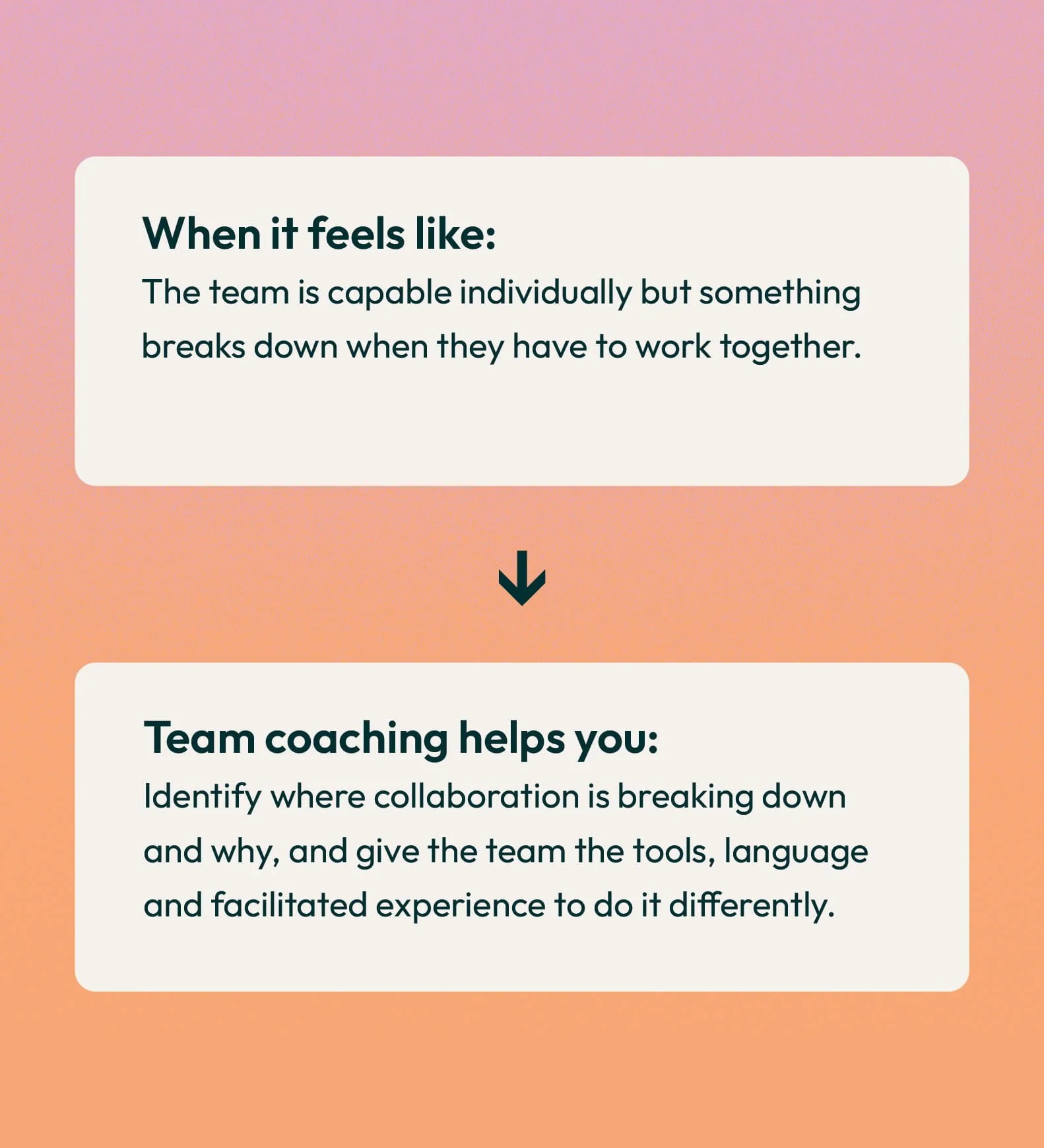
You've got good people, the talent is there… but something underneath isn't quite clicking – and you've probably already tried addressing it. A conversation, a restructure, maybe an offsite. And yet here you are, still watching the same dynamic play out...
The thing is, most team problems aren't what they look like on the surface.
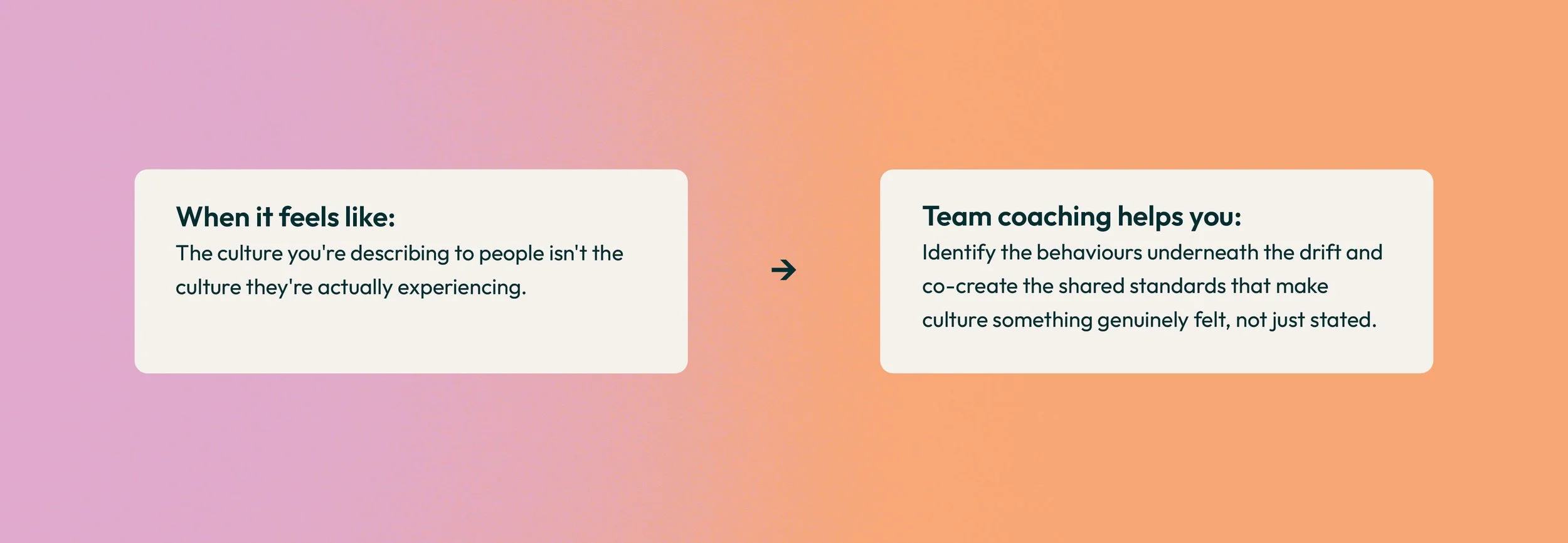
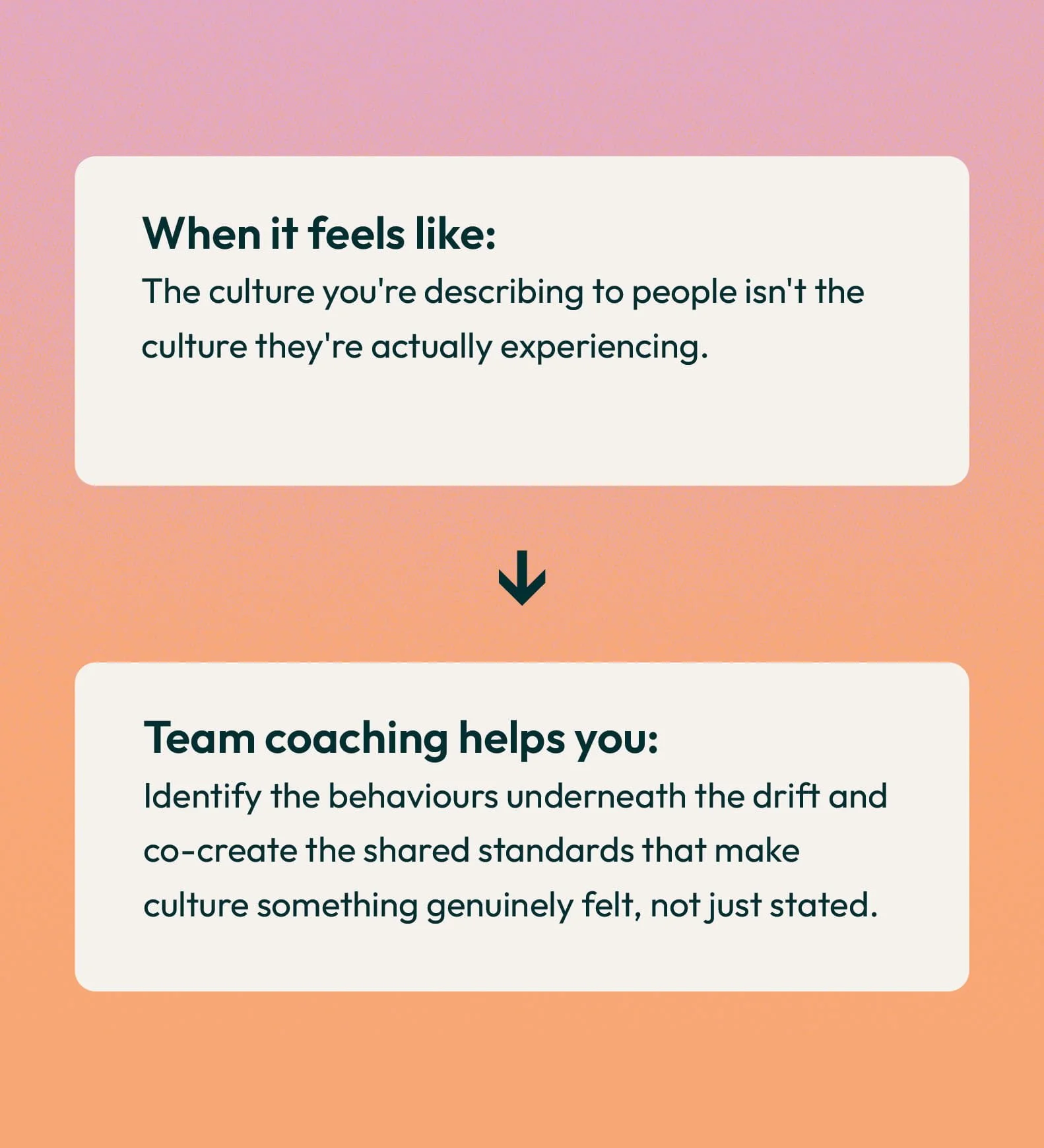
A productivity problem is often an accountability problem. An accountability problem is often a clarity problem. A culture problem is often a leadership problem that's been absorbed into the team over time.
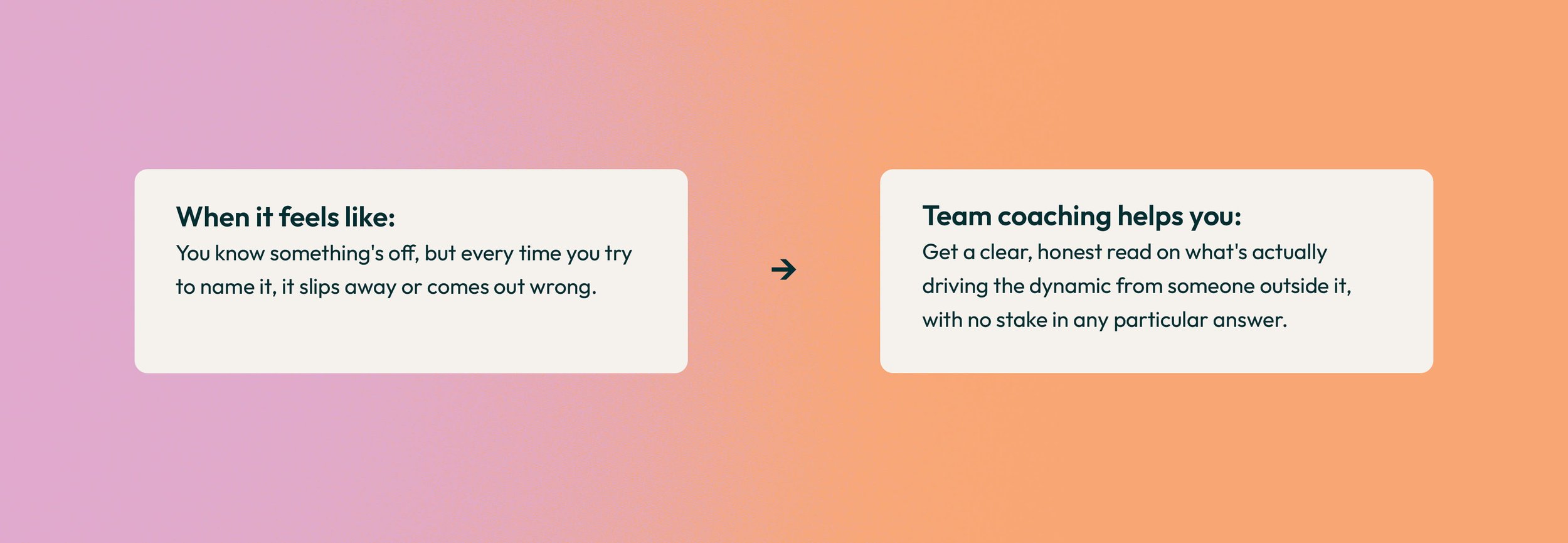
Team coaching starts with the diagnosis. Before any facilitation, before any structured sessions, Dan works to understand what's actually driving the dynamic through individual conversations, careful observation, and honest synthesis of the gap between how leadership perceives the team and how the team experiences itself. What's working. What's being avoided. What nobody has said out loud yet.
From that foundation, the work is built. Not prescribed before it.
You Might Be Reading This If...
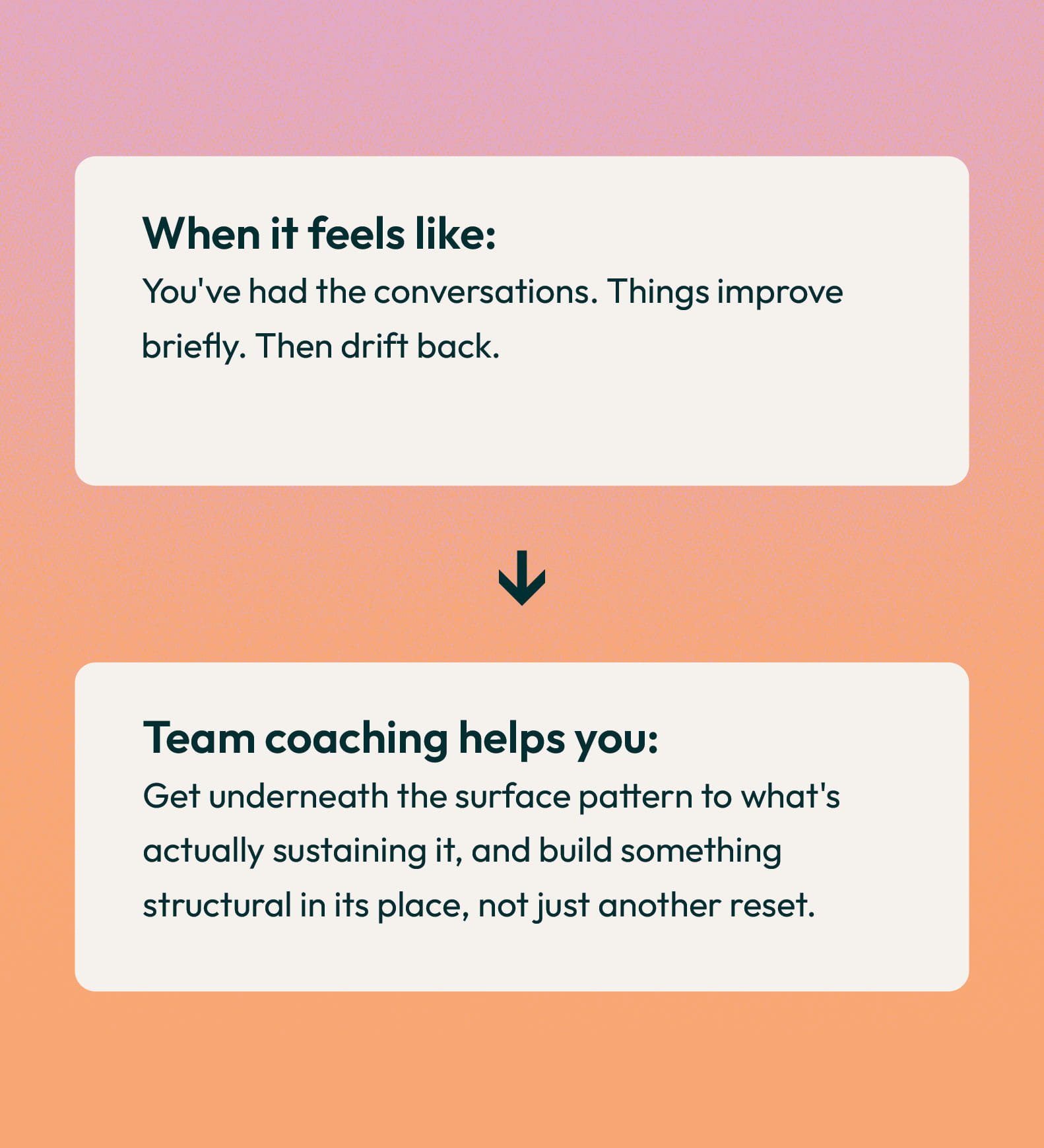
You've addressed the issue directly and it hasn't shifted
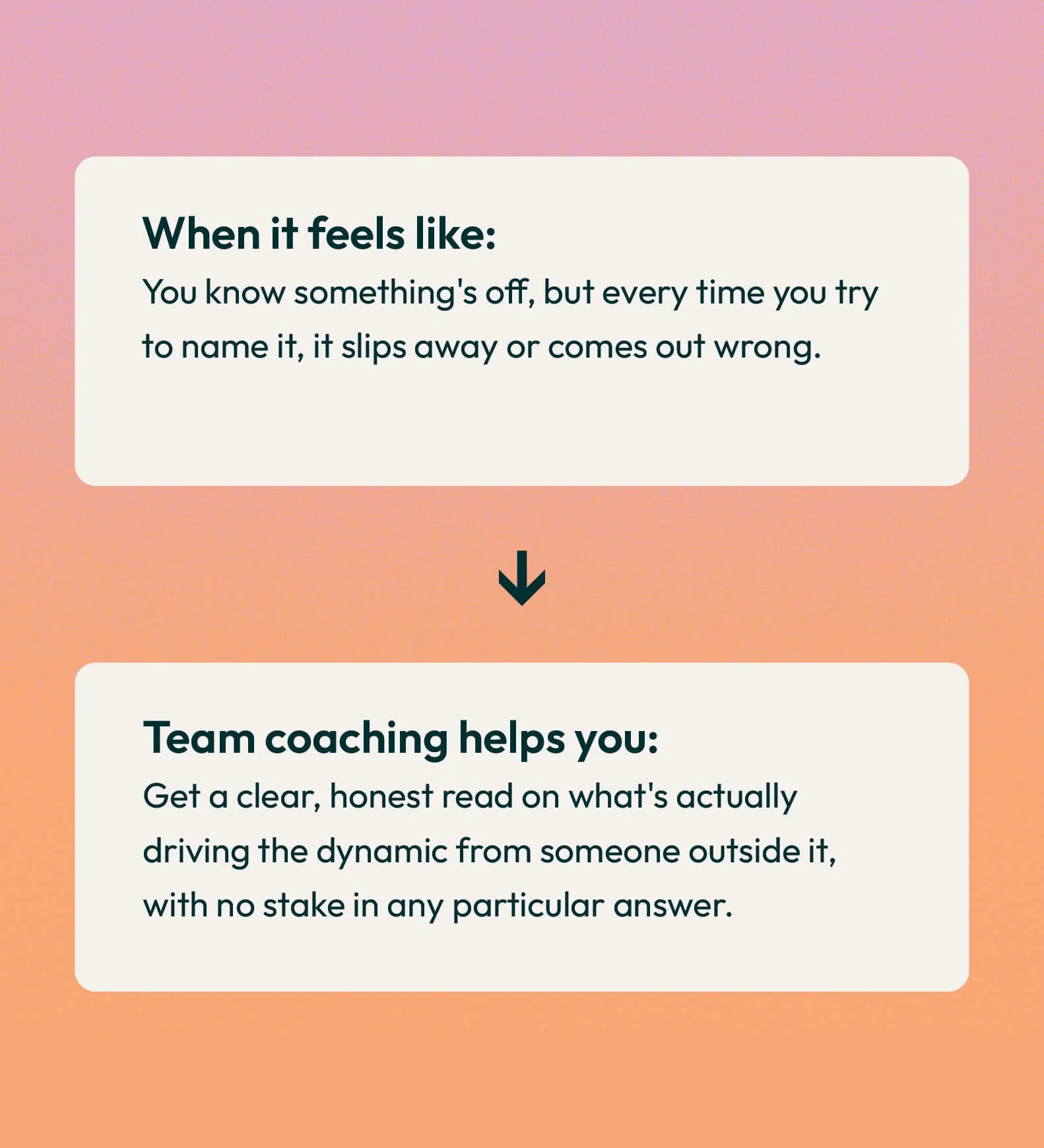
You can feel the team underperforming but can't clearly name why
You've inherited a team with existing dynamics you're trying to understand
Your team is growing fast and the cohesion that existed at smaller scale isn't holding
You've tried the offsite or the restructure, and you're looking for something that actually goes deeper
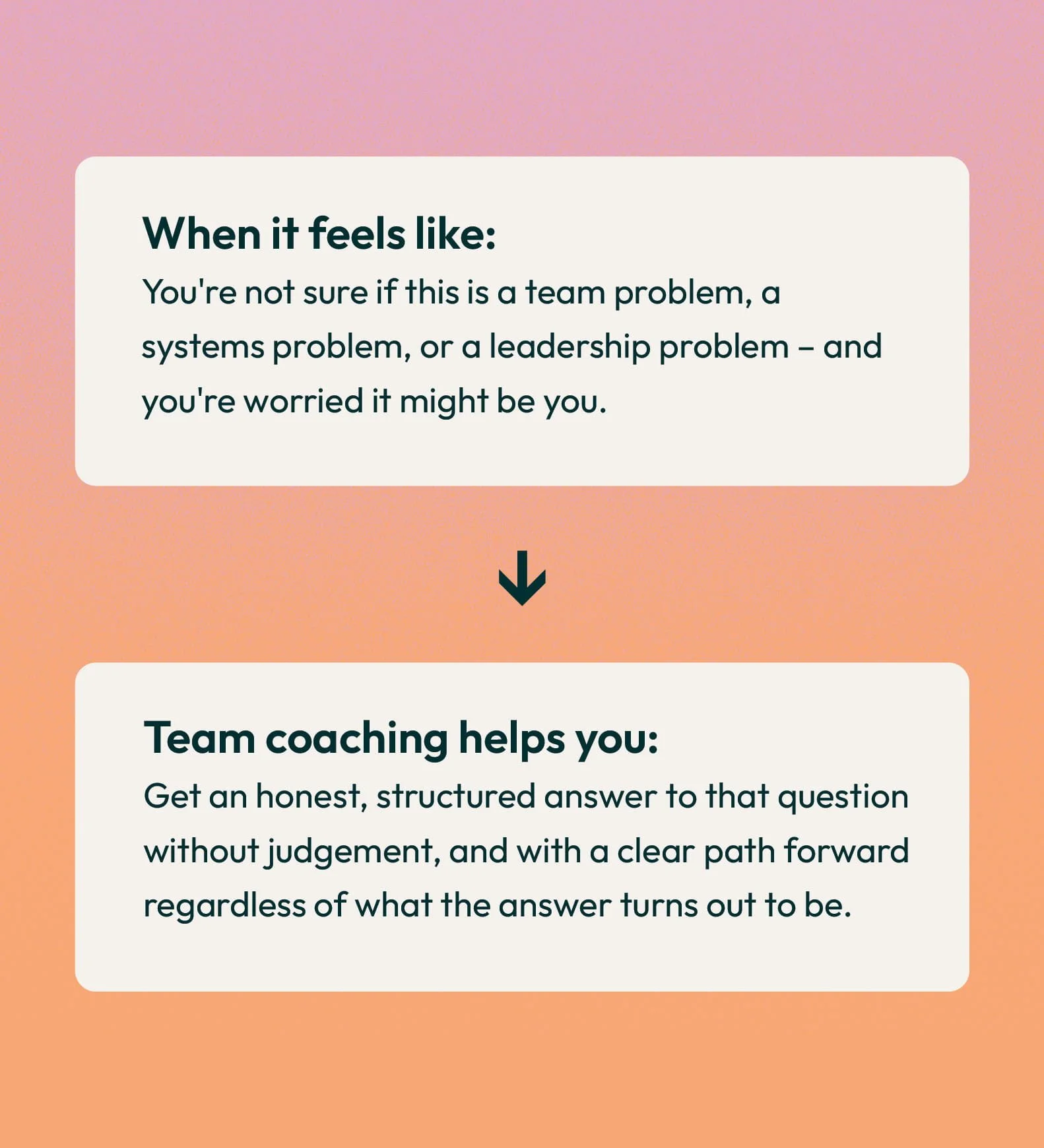
You suspect the issue might be partly about leadership, and you want someone who'll tell you honestly
When you can see it but can’t shift it
How it works
A Structured Engagement Built Around Your Team's Reality
Team coaching with Thryve is a tailored engagement, not a packaged program. It begins with understanding, not with a solution already in hand.
-
Before any facilitation begins, we understand the team. Individual conversations with team members, observations where relevant, and honest synthesis of the gap between how leadership sees the team and how the team experiences itself. This is where the real picture emerges – and it's often different from what anyone expected going in.
-
Findings are brought together clearly and named honestly. Friction points are surfaced, shared priorities are defined, and the team establishes a genuine picture of what high performance looks like for them, in their specific context. This phase often surfaces things that have needed to be said for a long time.
-
This is where the work happens, including structured group conversations designed and facilitated by us, the kind the team wouldn't get to productively on their own. Live issue work, role and expectation clarification, skill practice in context, and guided commitments and accountability structures that hold beyond the session.
-
Shifts made in a coaching session need to hold beyond it. This phase ensures they do through clear commitments, leadership check-ins, and an ongoing coaching rhythm that keeps momentum honest. Dan can remain involved in a hands-on capacity or step back to a lighter accountability role as the team's own capability embed.

Got 30 minutes and a team problem you can't quite crack?

What Changes When The Dynamic Shifts
-
Leaders who understand strategy and translate it into action with their teams.
-
Reduced friction between functions, clearer ownership, better coordination.
-
Teams that execute with more consistency and less escalation.
-
Stronger communication, sharper decision-making, greater emotional intelligence, and the ability to develop others rather than just direct them.
-
A leadership layer that can carry the business forward, not just keep pace with it.
-
Behaviours that reflect stated values, not just aspirations.
-
When leadership capability deepens across the organisation, the load at the top lightens.
-
Strategy that doesn't dilute between the leadership table and the people responsible for delivering it.
-
Not the kind that lives in a values document, but the kind that shows up in how the team operates under pressure.
-
Practical skills, shared language and facilitated experience that make working across functions less friction and more output.
-
Clarity of roles and decision rights so the right calls get made at the right level, without everything escalating.
-
Behaviours that match what's on the wall, consistently and across the whole team.
-
When teams develop genuine capability and confidence, the load at the top lightens significantly.
-
Not a spike after a session, but a shift in how the team actually operates week to week.
-
Team environments, dynamics and ways of working that help your best talent feel fulfilled, challenged, and rewarded for the long haul.
Team Coaching Across Brisbane, Gold Coast, Sydney and Melbourne
Thryve works with leadership teams and organisations across Australia, in person across Brisbane, the Gold Coast, Sydney and Melbourne, with hybrid options available for organisations with distributed teams or people across multiple locations.
Our experience spans leadership environments across technology & software, professional services, construction & infrastructure, manufacturing, health & allied services, finance, and agriculture & agtech. The organisations we works with differ significantly, but the pressures they face often don't. Team coaching engagements are shaped around your team's reality. Industry context informs the work, but it never defines it.
Frequently Asked Questions
-
Team coaching is a structured engagement focused on improving how a team thinks, communicates, decides and works together. Unlike training events or team building activities, team coaching starts with diagnosis: understanding what's actually driving the dynamic before designing any intervention. The goal is a genuine shift in how the team operates, not a temporary lift in morale.
-
Team building creates connection and energy – useful, but it doesn't touch the underlying dynamic. Team training develops specific skills – also useful, but it assumes you've already correctly identified the gap.
Team coaching does something different: it starts with honest diagnosis, surfaces what's actually driving underperformance, and builds more functional patterns in its place. Skill development can be part of a team coaching engagement when the diagnosis calls for it – a tool within the work, not the work itself.
-
That's the most common starting point, and it's a good one. Not knowing exactly what's wrong doesn't mean nothing's wrong, it usually means the issue is sitting one layer below the obvious. The diagnostic phase of the engagement is specifically designed to surface what's actually going on, often before any group facilitation begins.
-
A reasonable concern. We begin every engagement with individual conversations, before any group facilitation, so real issues are surfaced privately first. Group sessions are structured to build psychological safety progressively, not to force premature openness. The goal is honest, productive conversation. Not exposure.
-
Engagement length depends on the complexity of the team and the goals of the work. Most engagements run across three to six months, with some extending longer as the team's development continues. Short engagements suit focused, specific challenges. Longer engagements allow for deeper behavioural shifts and more sustained accountability.
-
Both work, and the right setting depends on the team and the goals of the engagement. In-person facilitation tends to produce the most embedded results. Hybrid delivery is available for organisations with distributed teams or people across multiple locations.
-
Absolutely. Executive team coaching is some of the highest-leverage work an organisation can invest in. The dynamics at the top shape everything underneath – alignment, culture, decision-making, and the confidence of leaders at every level. The approach is adapted to the seniority and context of the team.

Experience you can trust
Case Study
Inertia Engineering, Leadership Development Series
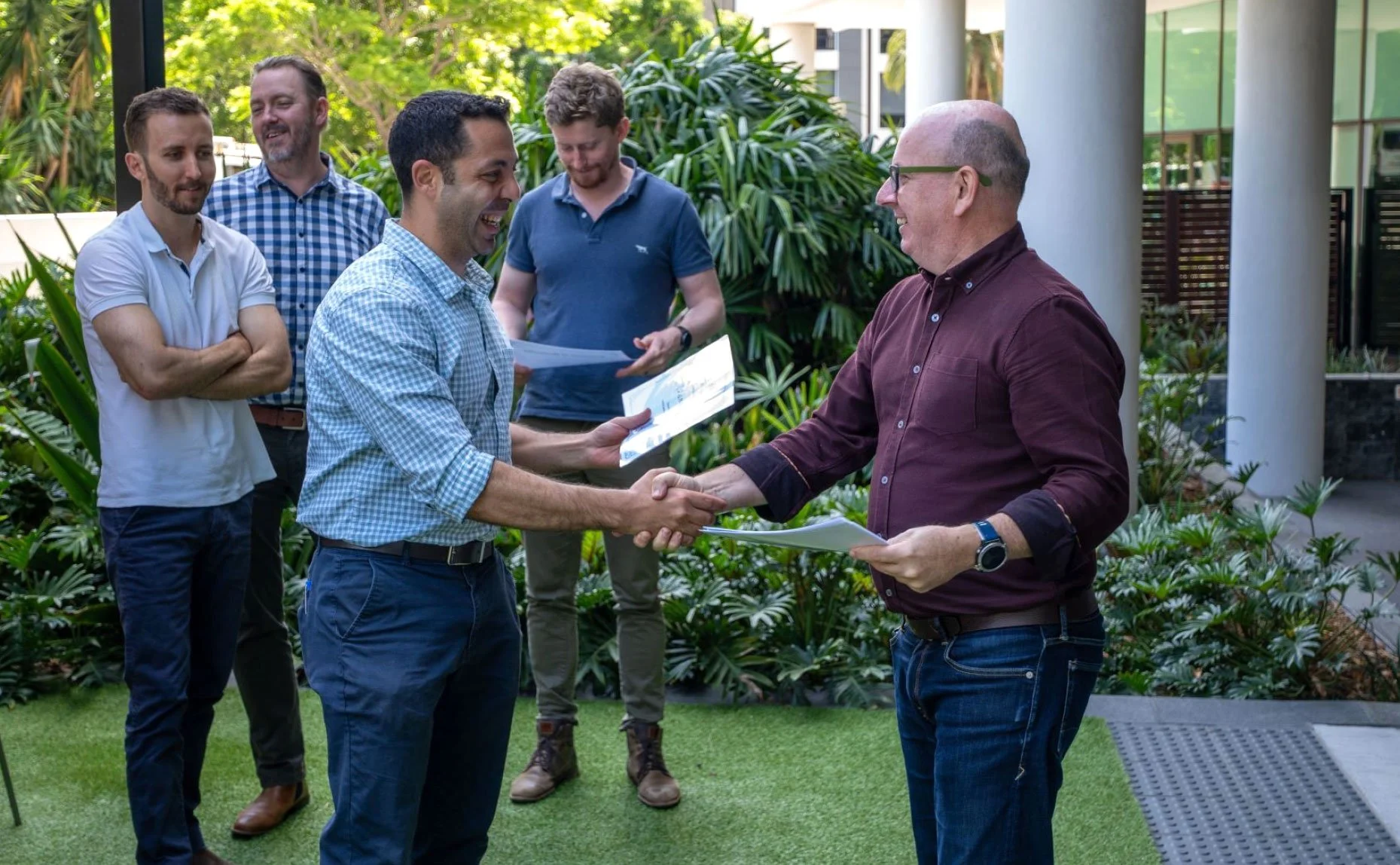
Inertia Engineering partnered with Dan to design and deliver a bespoke Leadership Development Series for their leaders and emerging leaders. A program built to be distinctly theirs, not a generic off-the-shelf solution.
The program explored leadership from three perspectives: teams, projects, and clients. The immediate and lasting shift was in communication – the capability that underpins everything else in leadership.
“We wanted to create a program that would not only support the development of our leaders and emerging leaders, but would also be uniquely ‘Inertian’.
Dan guided us through each of the key elements of the program, combining our goals and input with his knowledge and expertise to create and deliver a bespoke and successful leadership development program which we will continue to build on to support our people.”
-
Thryve founder, Dan Wright, holds Senior Practitioner accreditation with the European Mentoring and Coaching Council (EMCC), one of the highest standards of coaching practice internationally. He is a Founding Vice-President of the EMCC Asia Pacific region and brings more than thirty years of leadership experience across commercial, legal and organisational environments in Australia, Asia Pacific and Europe.
Thryve’s team coaching work is grounded in the experience of having built and led teams himself, which means the work is informed by what it actually feels like to be responsible for a team's performance, not just by frameworks for observing it.
His leadership development work is grounded in real organisational experience, having led teams, built businesses, and navigated the pressures of growth from the inside. The programs he designs are not theoretical constructs. They are built from a genuine understanding of what it takes for leadership to shift in practice, under pressure, inside a real organisation.


Not Sure What's Going On in Your Team?
Sometimes the most valuable thing is to talk it out with someone who's experienced the exact kind of pressure you're navigating, who can help you untangle what's actually going on. 30-minutes dedicated to your team challenges, with no obligation to go further.